STUDENTS’ PROUD MOMENTS / ROBOTS MEET CULTURE
Bunbot
Reimagining Cheung Chau’s Bun Mountain — an invitation to discover culture through play.
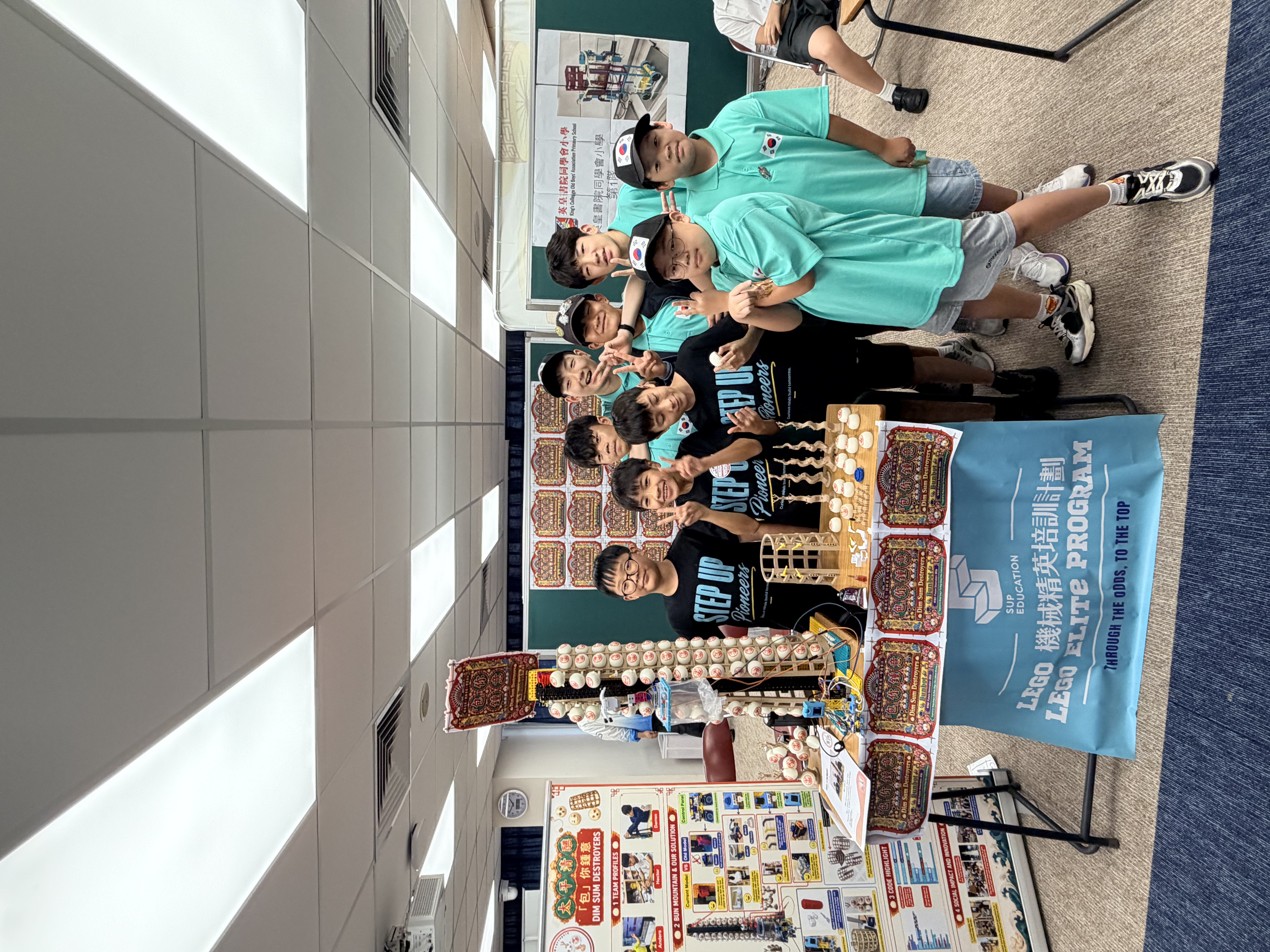
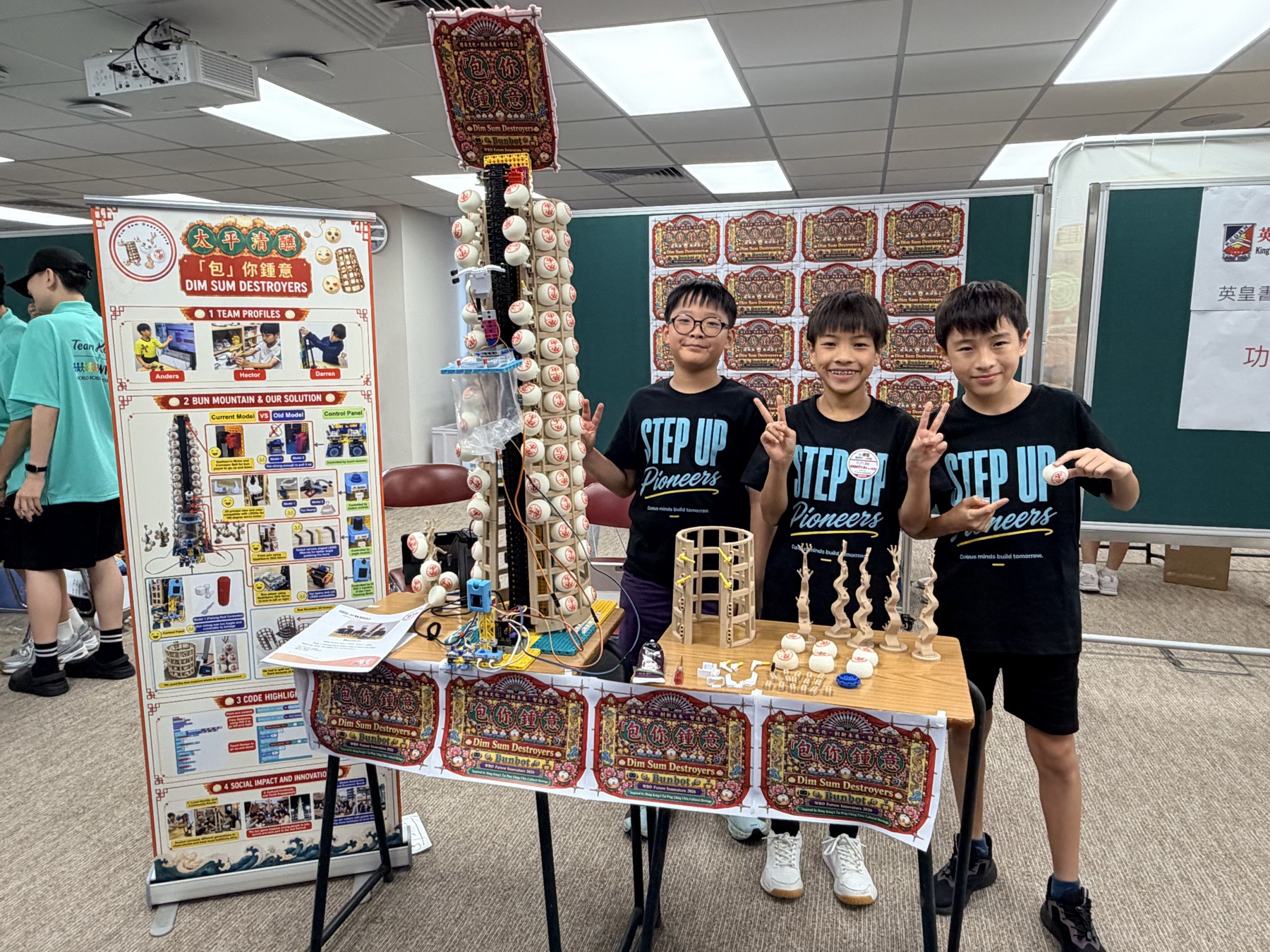
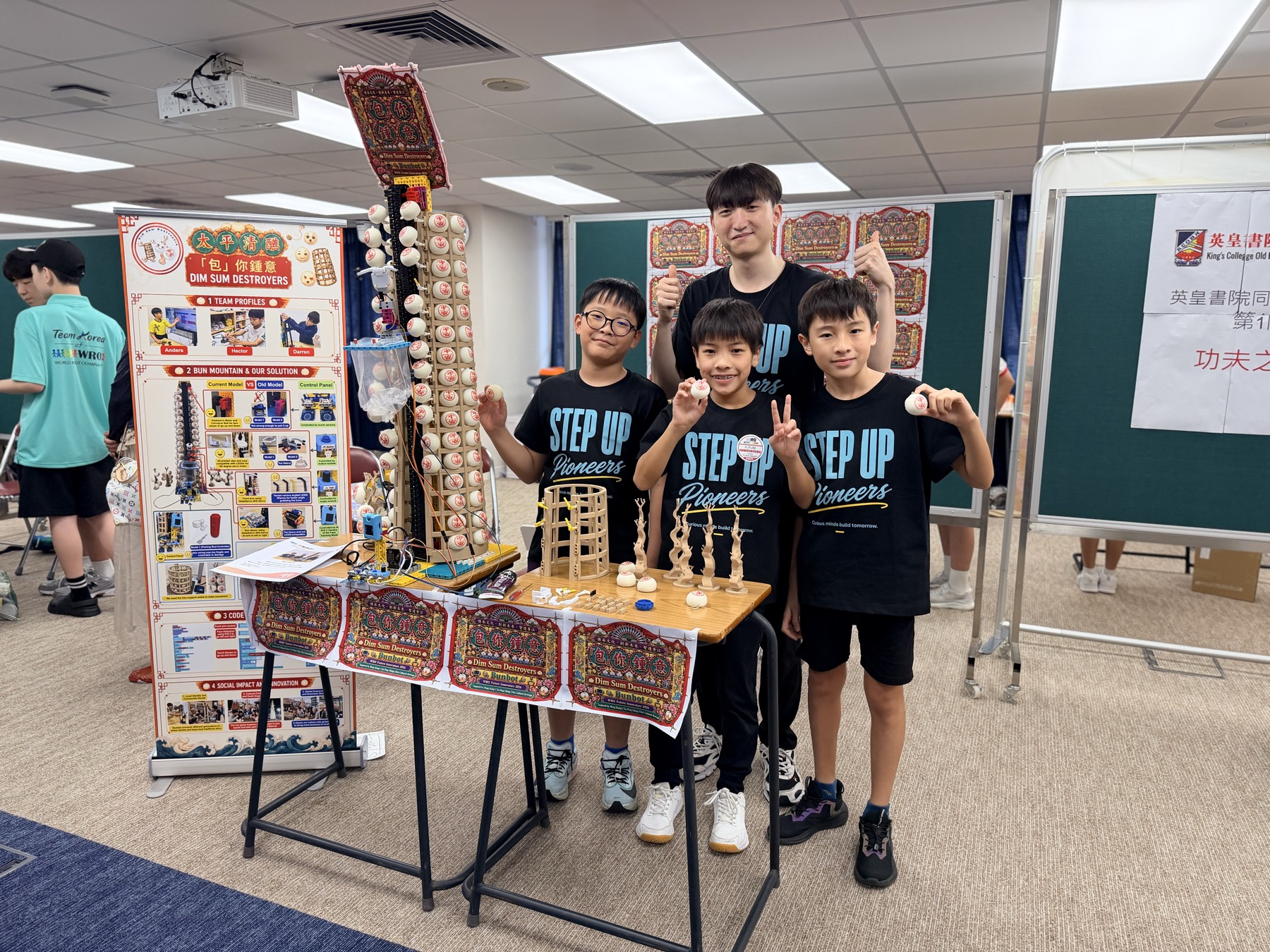
Cheung Chau’s Bun Mountain is an unmistakable part of Hong Kong’s cultural landscape. But how could children help someone who has never seen it become curious about the tradition? The Bunbot team imagined an interactive version: a robotic game that lets visitors take part, rather than simply look at a display.
Step up and become the player
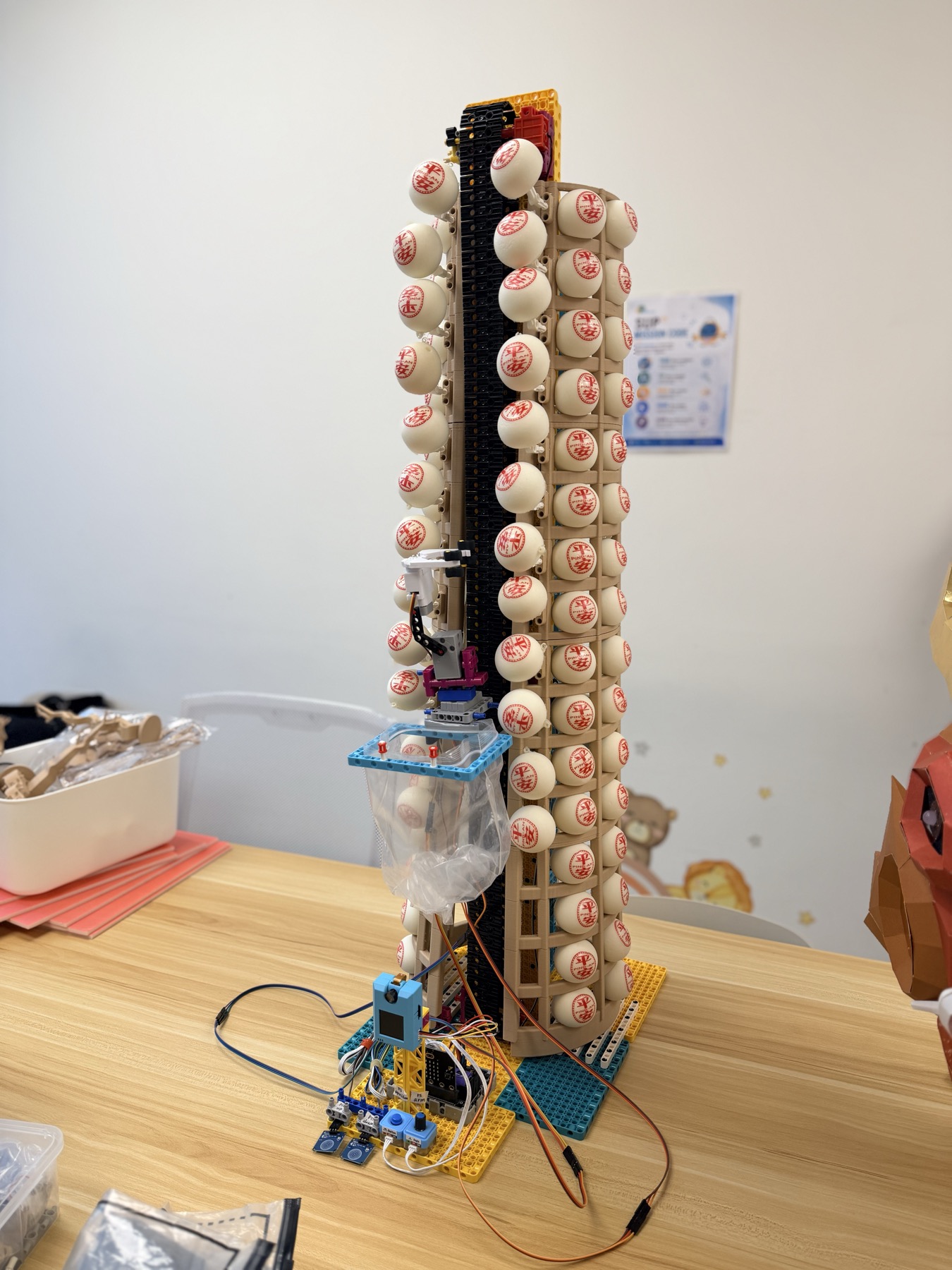
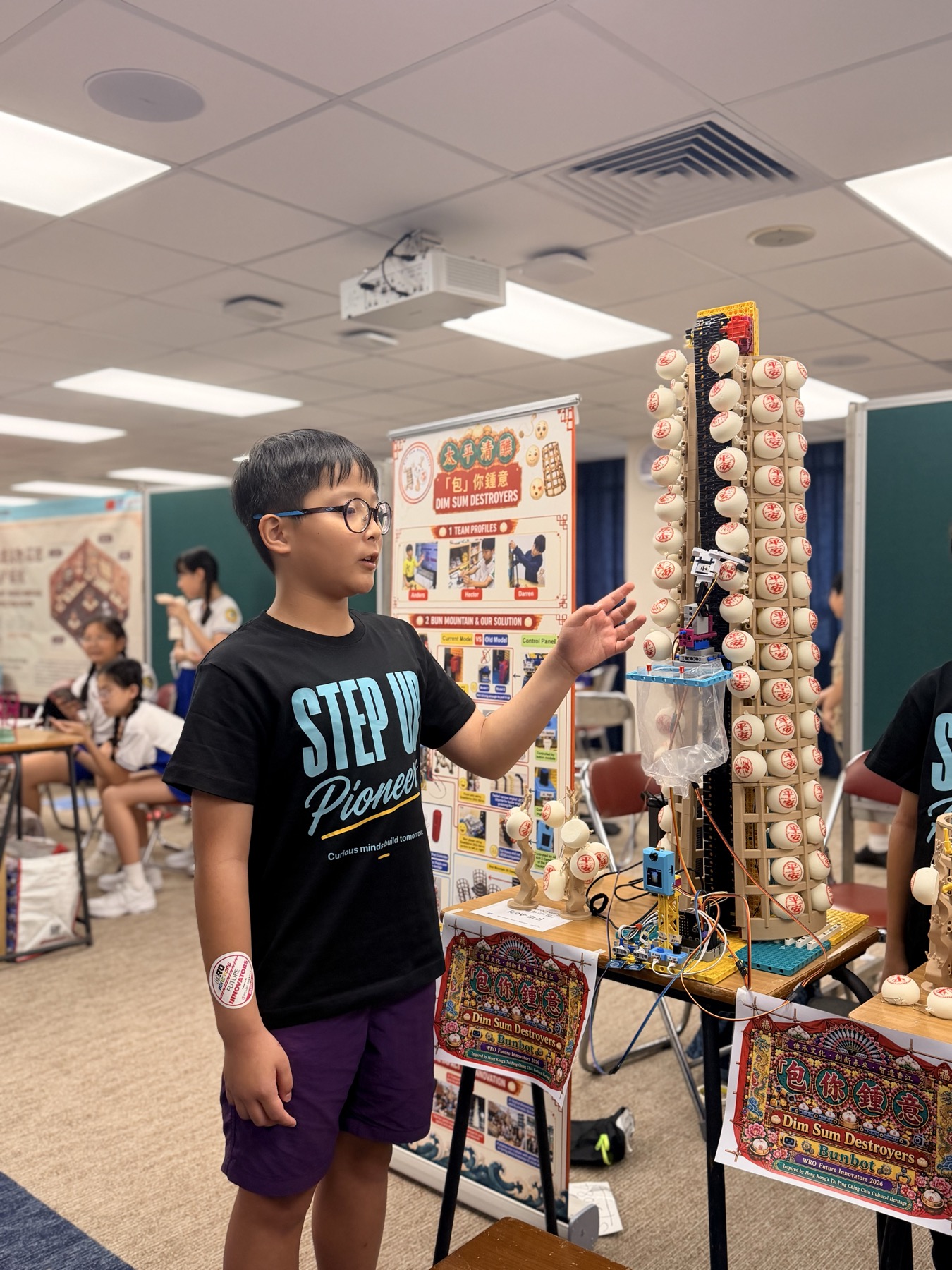
The students recreated the mountain and built a robotic claw to travel across it. A camera detects a player’s face position and uses it to steer the claw left or right. Touch controls send it up and down; a button operates the grabber. The challenge is to guide it towards a bun and make the catch.
That simple invitation brings robotics and culture together. The game gives visitors a reason to stop, try something unfamiliar and ask about the festival behind the build. For the students, it meant thinking about both a local tradition and the person who would encounter their project for the first time.
A good idea still has to work
Building the game revealed a problem: the first claw was too heavy for the mechanism to handle comfortably. The children could see the effect immediately — an exciting idea on paper could not yet move the way they wanted. They developed a lighter 3D-printed claw and changed the lifting arrangement, testing how those choices affected the movement.
They also explored different ways to control the robot before settling on camera-based face detection and physical controls. Making the game work meant bringing the parts together, watching what happened and adjusting the design. The children were learning how to turn a setback into a question they could investigate.
A story they can build — and tell
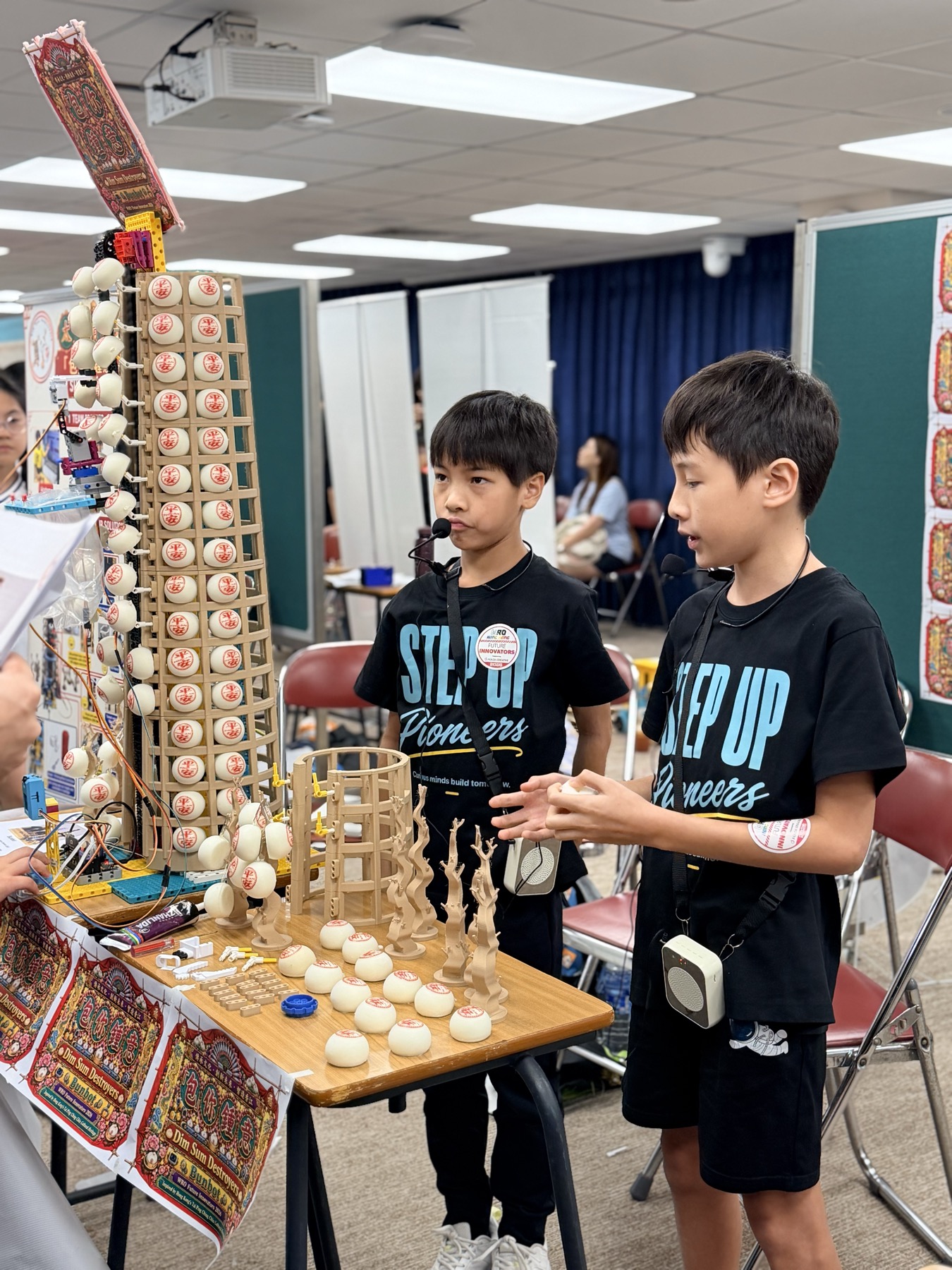
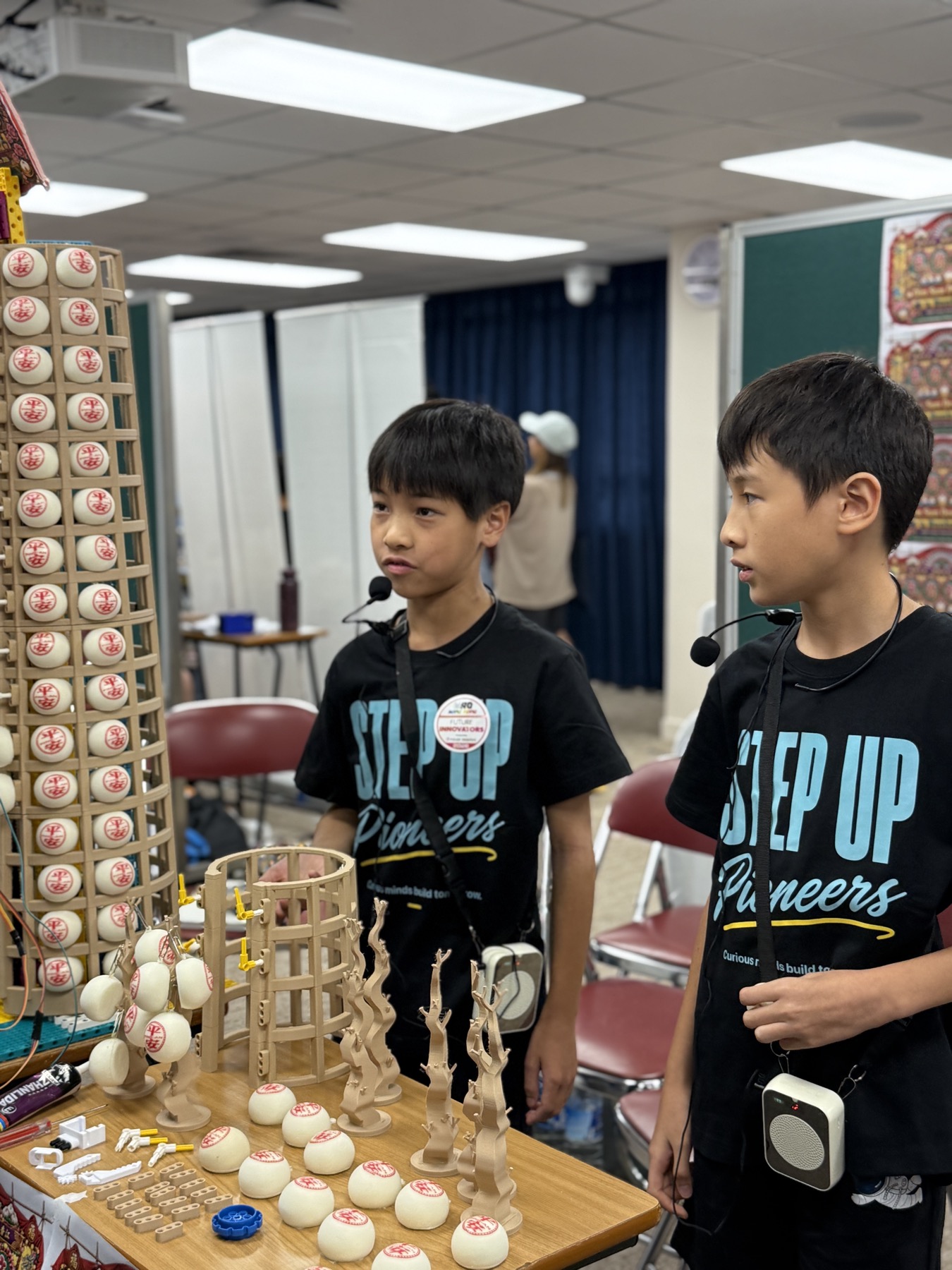
Pitching Bunbot meant explaining more than how to operate a claw. The students had to connect their cultural inspiration with the experience they had designed: what they wanted visitors to discover, how the game invited them in and what they had changed along the way.
Research, engineering and communication became parts of the same task. The finished project offered a playful introduction to a Hong Kong tradition; the work behind it gave the children something of their own to understand, improve and share.